• To make sure all is clear about the final paper/assignment, let me go over my latest thinking on how you all can wrap up your work for this course:

    1.  At our last class this Thursday (Dec. 8), I will have available copies of the "directed final paper" option that student may complete as their final paper/assignment for the class.  (As of this writing, I am planning for this "directed final paper" to have 5 questions, but students will only have to select and respond to three of these questions to complete the assignment and each question will have a 1500-word limit for answers.)  These final papers will be due on the last day of exams, December 21.

    2.  Students committed to doing an amicus brief for the SCOTUS juvenile LWOP cases should be making progress on their brief plans/contents ASAP.  Though the briefs may not be due to the Supreme Court until after the end of the exam period, I am going to expect students to have a reasonable working draft to submit by the last day of exams, December 21, so that I know serious work is afoot.

    3.  Instead of routes 1 or 2 above explaing above, students can do a "substantial" final paper or project of some other variety on a sentencing topic of their choosing.  My working definition of "substantial" is something in the neighborhood of 20-25 pages of written product if in the form of a traditional research report or advocacy "white paper."  But if the project is to take some other form (e.g., field-work research or other innovate and time-consuming activities), students are advised to keep a record of hours invested on the project through an informal "billing sheet" so that I can be confident that the product is the result of some "substantial" efforts.  Absent special needs and special approval, these sorts of final papers will also be due on the last day of exams, December 21.

    Any questions?

  • I talk about some of the issues discussed in class concerning the upcoming sentencing on my main blog in this post, and here is a link to the government's sentencing memo in US v. Blagojevich.  I continue to look for an on-line version of the defense filing (and will give extra credit to any student who can find a link and post it in the comments).

    In addition to the guideline stories I stressed in class, many other aspects of the government's memo merit consideration and comment.  And this local article from a Spingfield paper, titled "Federal sentencing a confusing process," might be of special interest and appeal as you think about how the public thinks about these sentencing issues in a high-profile setting without having had the benefit of an entire semester of Sentencing Class with Crazy Professor Berman.

    Among other topics, I would very much welcome/encourage you to pretend to be Judge Zagel and script in the comments a sentence (and an explanation for the sentence) to be imposed on Rod Blagojevich.  For all we know, the Judge might read these comments before sentencing.

  • I hope everyone enjoyed yesterday's visit by Jonathan Wroblewski (and the Duke game) as much as I did. I am sorry we did not have more time in class for questions, but I plan to use the first part of Thursday's class to follow-up on his lecture and also on the second short-paper assignment.  I also will discuss again all of the options (and challenges) for the final paper/project for the class.

    For substantive content, I plan to finish up the course by discussing mass incarceration (and sentencing severity) in general and life prison terms in particular.   Everyone is encouraged to read the selections from Chapter 7 noted on our syllabus (pp. 517-24, 552-78), as well as the Supreme Court's recent Eighth Amendment opinion in Graham v. Florida (which appears in the on-line supplement at pp. 96-112, and in full form here).

    In addition, and especially if you are working on an amicus brief for your final assignment, I also recommend checking out this very short and very recent opinion from the Supreme Court of Louisiana concerning the application of Graham to three cases involving persons sentenced decades ago to life sentences for nonhomicide crimes committed when they were juveniles.

  • come by my office around 11:45am on Tuesday.  I know we will have "room" enough for the three folks who have already expressed interest to me directly, and I think we might have room for a few more.  I plan on heading to Woody's in the Union, so folks could also think about heading to that locale to meet us at 12noon.

  • As you all know, everyone needs to turn in short-paper advice for Jonathan Wroblewski, the director of the Justice Department's Criminal Division Office of Policy and Legislation, by mid-day on Monday. While or after you complete this task, I hope you are thinking about hard questions to ask Mr. Wroblewski concerning his work for the Justice Department or his role on the US Sentencing Commission when he visits our class on Tuesday.

    For a variety of reasons, it might be a good idea to get a list of questions for Mr. Wroblewski started in the comments to this post. So, go for it. In addition, students should also feel free to react to the second short-paper assignment in the comments to this post.

  • Our final pre-Thanksgiving class will be a day for discussing problems: (a) I can/will respond to any problems anyone has with completing the second short paper, (b) I can/will respond to any problems anyone has figuring out what they are doing for the final paper, and (c) I can/will ask a bunch of hard questions about Problems 5-4 and 6-1 from the casebook (pp. 383-84 and 456-58 in our text).

    I am (justifiably) fearful that 75 minutes on Tuesday will not be sufficient to do justice to both Problems 5-4 and 6-1 from the casebook, especially if/when everyone has a belly full of turkey and stuffing from the SBA lunch.  Consequently, I am eager for initial student discussion/debate in the comments here about the issues posed by Problems 5-4 concerning the role/significance in federal sentencing of these eight offender characteristics:

    1. age
    2. education
    3. vocational skills
    4. mental and emotional condition
    5. physical condition, including drug dependence
    6. previous employment record
    7. family ties and responsibilities
    8. community ties

    To foster targeted discussion, I would like to hear in the comments views on whether students think one or more of these offender characteristics absolutely should or absolutely should not be considered at sentencing.  

    To get the conversation started, I will assert my (devil's advocate?) opinion that EDUCATION absolutely should be considered at sentencing (based in part on this criminal justice report on "Education and Public Safety"), while PHYSICAL CONDITION absolutely should not be considered at sentencing (based in part on my fear that there is a worrisome tendency of persons to judge poorly those who look different).  Does everyone agree?  

    For anyone who agrees that education should be considered at sentencing, would you also agree with operationalizing this view by providing sentencing rules/guidelines stating that for each and every degree obtained (high-school, college, graduate school), there should be a presumptive 25% reduction in the imposed prison term?  If you do not like that rule/guideline, how else might be craft rules for considering education (or other offender characteristics) at sentencing?

    UPDATE:  I have linked from this post at my main blog to this article reporting on research which suggest that, for American men, "marriage was associated with lower levels of crime and less frequent substance use [and that] following the birth of a first biological child, men's crime trajectories showed slope decreases."   Perhaps this provides support for, say, a 10% sentence reduction for men who get married and another 10% discount following the fathering of a first child."

  • CLASS PLANS:  Today and next Tuesday we will be discussing: (1) Tiernan & USSG 3E1.1 & Pepper and sentencing discounts for pleas and cooperation, (2) Problem 5-4 & Pepper and sentencing based on offender characteristics, and then (3) McMillan & Blakely & Problem 6-1 (in casebook).  A timely and interesting circuit ruling that touches on many of these issues was handed down yesterday in US v. Robertson, No. 11-1651 (7th Cir. Nov. 16, 2011) (available here).  I recommend it highly as a compliment/follow-up to many of the issues we will discuss in the next few classes.

    SHORT PAPER LOGISTICS: The short-paper assignment (explained here) must be submitted no later than Monday 9am on November 28.  Your names should be on the assignment, and you can hand in either a hard-copy or via a pdf attachment to an e-mail to me.  Important note: earlier this week, Jonathan Wroblewski's boss gave a significant speech on federal sentencing law and policy (which I suspect Jonathan helped draft).  The text of this speech is available at this link and may help your short-paper drafting efforts.

    NEW SCOTUS CASES (AND AMICI OPPORTUNITIES):  In this post at my main blog, I report on two intricate sentencing issues that have split lower federal courts that now appear ready for Supreme Court review.  If (when?) the Supreme Court grants cert on these issues, they may become the focal point (along with the juve LWOP cases) of much of our post-Thanksgiving discussions during our last two classes following Jonathan Wroblewski's visit on Tuesday, November 29.

    LUNCH/DINNER OPPORTUNITY WITH DOJ GUY: Speaking of Jonathan Wroblewski's visit on Tuesday November 29, I was thinking about trying to organize a lunch or dinner with students on that day if there is some student interest.  I do not want to make this a huge/formal event, but students should let me know ASAP if they would be interested in such an opportunity.

  • WilliamKunstlerDTU_FilmStill1_WilliamKunstler_byMaddyMiller_t600I hope many of you enjoyed last week's movie about William Kunstler's remarkable life as a lawyer and activist.  I welcome comments about any aspects of the movie (including whether the picture reprinted here is conclusive proof of child abuse — by both Bill Kunstler and whomever snapped this picture).  I especially encourage everyone to spend some time exploring the full stories of the many (in)famous cases and causes in which Kunstler was involved.  Of particular concern and interest for the themes of this class is the full story of the Attica Prison riot, which this Wikipedia entry summarizes this way:

    The Attica Prison Riot occurred at the Attica Correctional Facility in Attica, New York, United States in 1971. The riot was based in part upon prisoners' demands for better living conditions. On September 9, 1971, responding, in part, to the death of prisoner George Jackson, a black radical activist prisoner who had been shot to death by corrections officers in California's San Quentin Prison on August 21, about 1,000 of the Attica prison's approximately 2,200 inmates rebelled and seized control of the prison, taking 33 staff hostage. During the following four days of negotiations, authorities agreed to 28 of the prisoners' demands, but would not agree to demands for complete amnesty from criminal prosecution for the prison takeover or for the removal of Attica's superintendent. On the order of Governor Nelson Rockefeller, state police took back control of the prison. When the uprising was over, at least 39 people were dead, including ten correctional officers and civilian employees.

    Though there are a number of films and documentaries about Attica, I feel we have already had our share of prison-oriented movie experiences.  Consequently, I also want students in the comments to consider making recommendations or suggestions for other movie options for any future class showings.  (There is always Justice Scalia's favorite movie, "My Cousin Vinny," but I suspect and hope most of you have already seen that one.)

  • As discussing in class, your second short paper assignment is a requirement that you write a very brief memo — no more than 2 pages! — to Jonathan Wroblewski, who is the director of the Justice Department's Criminal Division Office of Policy and Legislation.  Here is DOJ's description of that Office's work and mission:

    The office's legislative component develops legislative proposals, legal memoranda, and Congressional testimony.  We prepare comments on pending legislation and other legislative matters affecting the federal criminal justice system; and help represent the Department before the U.S. Sentencing Commission on sentencing-related issues, and before the Judicial Conference's Advisory Committees on Criminal Rules and Evidence regarding the Federal Rules of Criminal Procedure and the Federal Rules of Evidence.

    The office's policy component analyzes policy and management issues related to criminal law enforcement and the criminal justice system.  We identify problems and emerging trends; analyze crime data, federal caseload statistics, and other criminal justice system information; develop policy options and recommendations; and provide research, technical, and management support to the Assistant Attorney General and other Division and Department policymakers.

    The memo is to recommend how you think the Justice Department could and/or should (formally and/or informally) respond to the US Sentencing Commission recently-released report on Congress on "Mandatory Minimum Penalties in the Federal Criminal Justice System."

  • Here is a revised agenda for Thusday and beyond so that you can plan readings et al accordingly:

    Thursday 11/10: Bodiker Lecture at 12 noon in Saxbe Auditorium (be sure to RSVP to make sure you get a lunch) , followed by a showing of  "Disturbing the Universe " in our classroom around 1:30pm, followed by class in which we will discuss the who and how of developing sentencing law for offense conduct and perhaps start to explore the why for considering offender circumstances at sentencing.

    Tuesday 11/15Tiernan & USSG 3E1.1 (in casebook), as well as Problem 5-4 & Pepper (in on-line supplement at pp. 66-79, and also in recommended full form at this link).

    Thursday 11/17 & Tuesday 11/22: Discuss McMillan Blakely & Problem 6-1 (in casebook) and, if time permits, discussion of plea bargaining realities and practices.

  • Seven years ago, back when my main blog was just getting going, I did this (silly?) post in which I imagined a "Sentencing Judges Hall of Fame" — an institution like the Baseball Hall of Fame which would seek to foster an appreciation of the historical development of sentencing and its impact on our justice system.  As I explained in the post, the "first inductee of the Sentencing Judges Hall of Fame would be easy: Judge Marvin Frankel, whose text Criminal Sentences: Law Without Order helped launch modern sentencing reforms."

    I then went on to ask these tough (and silly) follow-up questions: "Should there be separate capital and non-capital wings, state and federal wings, trial and appellate wings?  Would Supreme Court Justices and judges who serve on sentencing commissions have an unfair advantage because of the visibility of their sentencing work?  Would pre-guidelines judges be unfairly disadvantaged for sentencing during the 'dead law' era?"

    I note these musing in part to encourage you to think about whether you think any particular Justices and judges ought to get special attention based on their sentencing work.  But I also share these comments to serve as a kind of introduction to my linking hereand presenting below video from one of the sure-fire members of this Sentencing Judges Hall of Fame, Judge Nancy Gertner.

    Judge Gernter's professional career is too dynamic to summarize here, and I encourage you to check out all the interview videos on this HLS webpage.  And the video below includes some notable sentencing-specific comments starting just after the 3:00 mark.

  • Big sentencing news from the Supreme Court today, as reported in this blog post at SL&P: "Supreme Court grants cert on two Eighth Amendment LWOP challenges for 14-year-old murderers!"  These cases now on the Supreme Court's agenda are Miller v. Alabama and Jackson v. Hobbs (which comes from Arkansas).

    I will discuss these two new SCOTUS cases briefly in class this week (in part to explain how writing an amicus brief for filing in the Supreme Court can be an alternative to the final take-home paper in the class).  In the meantime, here are links to the state court rulings now to be reviewed by SCOTUS: 

  • I am sorry the excitement of the first Ohio DP Task Force meeting (now reported here in the Columbus Dispatch and here by the AP) slowed us down today.  Fortunately, this just means less work for students next week as I adjust our readings/focus.  Here is a revised agenda for Friday and beyond, with some additional recommended events in the mix:

    Friday 11/4: "Framing Innocence" event at 12noon in Room 252 (be sure to RSVP to make sure you get a lunch) AND Sentencing Movie Matinee at 3pm in Room 344 (at which snacks will be provided and after which will be a Berman happy hour).  In addition, for any early risers seeking a free breakfast, consider attending this event over in the Journalism Building in which Heather Washington, an OSU Ph.D. Candidate, will present her work on "Parental Incarceration and Children's Behavior Problems: Uncovering the Not-So-Universal Effects of Fathers' Imprisonment."

    Tuesday 11/8: Class will focus on quantifying offense conduct with emphasis on Coker v. Georgia (in casebook) and Problem 4-7 (p. 321 in casebook).

    Thursday 11/10Bodiker Lecture at 12 noon in Saxbe Auditorium (be sure to RSVP to make sure you get a lunch) AND class will focus on quantifying "mitigating" offender characteristics with emphasis on State v. Tiernan & USSG 3E1.1 (in casebook), as well as Problem 5-4 & US v. Pepper (in on-line supplement at pp. 66-79, and also in full form at this link).

    Friday 11/11IF INTERESTED … another Sentencing Movie Matinee at 3pm in Room 344 (at which snacks will be provided and after which will be a Berman happy hour). 

    Monday AM UPDATE:  I was VERY pleased with the number of persons who made it to the Sentencing Movie Matinee last Friday, and I want to do another one (this time with an even better, but longer, movie).  

    But having figured out that 11/11/11 is a holiday, I am thinking of doing the movie on Monday 11/14 at 3pm.  But only if some people are available/interested to watch this great movie at that time.  Please report in the comments whether you might be able/interested in attending an even better movie on Monday 11/14.

  • I made brief mention in class of Justice Stephen Breyer's concurrence in Watts, and I thought it might be useful to quote all of it here as the prelude to an (extra credit) challenge:

    I join the Court’s per curiam opinion while noting that it poses no obstacle to the Sentencing Commission itself deciding whether or not to enhance a sentence on the basis of conduct that a sentencing judge concludes did take place, but in respect to which a jury acquitted the defendant.

    In telling judges in ordinary cases to consider “all acts and omissions . . . that were part of the same course of conduct or common scheme or plan as the offense of conviction,” United States Sentencing Commission, Guidelines Manual § 1B1.3(a)(2) (Nov. 1995) (USSG), the Guidelines recognize the fact that before their creation sentencing judges often took account, not only of the precise conduct that made up the offense of conviction, but of certain related conduct as well. And I agree with the Court that the Guidelines, as presently written, do not make an exception for related conduct that was the basis for a different charge of which a jury acquitted that defendant. To that extent, the Guidelines’ policy rests upon the logical possibility that a sentencing judge and a jury, applying different evidentiary standards, could reach different factual conclusions.

    This truth of logic, however, is not the only pertinent policy consideration. The Commission in the past has considered whether the Guidelines should contain a specific exception to their ordinary “relevant conduct” rules that would instruct the sentencing judge not to base a sentence enhancement upon acquitted conduct. United States Sentencing Commission, Sentencing Guidelines for United States Courts, 57 Fed. Reg. 62832 (1992) (proposed USSG § 1B1.3(c)). Given the role that juries and acquittals play in our system, the Commission could decide to revisit this matter in the future. For this reason, I think it important to specify that, as far as today’s decision is concerned, the power to accept or reject such a proposal remains in the Commission’s hands.

    Here is the (extra credit) challenge for members of the class: Can/will someone propose in the comments a formal US Sentencing Guidelines provision to limit the authority of federal sentencing judge to enhance a sentence on the basis of acquitted conduct (which may or may not also cover uncharged conduct of the sort at issue in Fitch)? 

    (Note:  The US Sentencing Commission has, in fact, never formally proposed an "acquitted conduct" provision in response to Watts.)

    In addition to being eager to see student efforts to draft a provision of the US Sentencing Guidelines provision to limit the authority of federal sentencing judge to enhance a sentence on the basis of acquitted (and/or uncharged) conduct, I wonder if folks think that, now that Booker has made the guidelines advisory, the "problem" in Watts is now better (or worse).

  • I mentioned briefly in class Professor Paul Butler's (in)famous and provocative law review article in which he urged race-based jury nullification.  The article was published as Racially Based Jury Nullification: Black Power in the Criminal Justice System, 105 Yale L.J. 677 (1995), and is available at this link.  Here is a snippet from the piece's introduction:

    My thesis is that, for pragmatic and political reasons, the black community is better off when some nonviolent lawbreakers remain in the community rather than go to prison.  The decision as to what kind of conduct by African-Americans ought to be punished is better made by African-Americans themselves, based on the costs and benefits to their community, than by the traditional criminal justice process, which is controlled by white lawmakers and white law enforcers.  Legally, the doctrine of jury nullification gives the power to make this decision to African-American jurors who sit in judgment of African-American defendants.  Considering the costs of law enforcement to the black community and the failure of white lawmakers to devise significant nonincarcerative responses to black antisocial conduct, it is the moral responsibility of black jurors to emancipate some guilty black outlaws….

    My goal is the subversion of American criminal justice, at least as it now exists.  Through jury nullification, I want to dismantle the master's house with the master's tools.  My intent, however, is not purely destructive; this project is also constructive, because I hope that the destruction of the status quo will not lead to anarchy, but rather to the implementation of certain noncriminal ways of addressing antisocial conduct.  Criminal conduct among African- Americans is often a predictable reaction to oppression. Sometimes black crime is a symptom of internalized white supremacy; other times it is a reasonable response to the racial and economic subordination every African-American faces every day.  Punishing black people for the fruits of racism is wrong if that punishment is premised on the idea that it is the black criminal's "just deserts."  Hence, the new paradigm of justice that I suggest in Part III rejects punishment for the sake of retribution and endorses it, with qualifications, for the ends of deterrence and incapacitation.

    In a sense, this Essay simply may argue for the return of rehabilitation as the purpose of American criminal justice, but a rehabilitation that begins with the white-supremacist beliefs that poison the minds of us all — you, me, and the black criminal.  I wish that black people had the power to end racial oppression right now.  African-Americans can prevent the application of one particularly destructive instrument of white supremacy —American criminal justice — to some African-American people, and this they can do immediately.  I hope that this Essay makes the case for why and how they should.

    For those who (understandably) do not have enough time to read all of Butler's remarkable Essay, here is an effective (though dated) 60 Minutes video (under 10 minutes) discussing Butler's ideas.

    Anyone who is eager for even more video on this issue can also see a series of 1995 segments on the Phil Donahue show (part 1 here, part 2 here, part 3 here…) with Butler and other guests.

  • As noted in this agenda post, our class this Tuesday will focus on the consideration of acquitted and/or uncharged conduct at sentencing, with particular emphasis on the Supreme Court's 1997 ruling in US v. Watts (excerpted in casebook, full text here) and the Ninth Circuit's ruling just last month in US v. Fitch (full opinion here).  To whet everyones' appetite, and perhaps begin our discussion via comments to this post, consider the start of the majority opinion in Fitch:

    David Kent Fitch was convicted by a jury of nine counts of bank fraud, two counts of fraudulent use of an access device, two counts of attempted fraudulent use of an access device, two counts of laundering monetary instruments, and one count of money laundering.  The applicable Sentencing Guidelines range was 41-51 months.  At sentencing, however, the district judge found by clear and convincing evidence that Fitch had murdered his wife, and that her death was the means he used to commit his crimes. Relying on that finding, he imposed a sentence of 262 months.

    Fitch appeals his sentence, arguing that the district court committed procedural error and that, in any event, its sentence was substantively unreasonable.  Because Fitch has never been charged with his wife’s murder, his sentence is a poignant example of a drastic upward departure from the Guidelines range — albeit below the statutory maximum — based on uncharged criminal conduct.  We have not had occasion to address a scenario quite like this, but are constrained to affirm.

  • I hope everyone recharged their sentencing batteries with the help of Thursday's break because this coming week is going to be very full with exciting sentencing issues and related activities.  Here is a brief agenda to aid our collective planning:

    Monday 10/31USSC expected to release 600-page report(!) on federal mandatory minimums.

    Tuesday 11/1: Class will focus on consideration of acquitted/uncharged conduct at sentencing, with emphasis on US v. Watts (in casebook) and recent Ninth Circuit ruling in US v. Fitch (available here, further discussed in this blog post).

    Thursday 11/3: Class will focus on quantifying offense conduct with emphasis on Coker v. Georgia (in casebook) and Problem 4-7 (p. 321 in casebook).

    Friday 11/4: "Framing Innocence" event at 12noon in Room 252 AND Sentencing Movie Matinee at 3pm in Room 344 (at which snacks will be provided and after which will be a Berman happy hour)

  • should appear in comments to this post.

    UPDATE: Hmmm… nobody wants to comment on the work of colleagues. Not surprising, but a bit disappointing.  Nevertheless, this post will stay open for comments, and I will perhaps try to prompt some students comments with a few of my own in the days ahead (if necessary).

  • The title of this post starts with the headline of this interesting commentary, which was published in yesterday's New York Times.  Though not saying one word about sentencing, I thought many parts of piece (and especially the passages quoted below) were especially interesting and deserved consideration as we transition into our review and assessment of guideline sentencing systems:

    Why are we still stymied when trying to measure intelligence, schools, welfare and happiness?

    The problem is not that we don’t yet have precise enough tools for measuring such things; it’s that there are two wholly different ways of measuring.

    In one kind of measuring, we find how big or small a thing is using a scale, beginning point and unit. Something is x feet long, weighs y pounds or takes z seconds. We can call this “ontic” measuring, after the word philosophers apply to existing objects or properties.

    But there’s another way of measuring that does not involve placing something alongside a stick or on a scale.  This is the kind of measurement that Plato described as “fitting.” This involves less an act than an experience: we sense that things don’t “measure up” to what they could be. This is the kind of measuring that good examples invite.  Aristotle, for instance, called the truly moral person a “measure,” because our encounters with such a person show us our shortcomings.  We might call this “ontological” measuring, after the word philosophers use to describe how something exists.

    The distinction between the two ways of measuring is often overlooked, sometimes with disastrous results.  In his book “The Mismeasure of Man,” Stephen Jay Gould recounted the costs, both to society and to human knowledge, of the misguided attempt to measure human intelligence with a single quantity like I.Q. or brain size. Intelligence is fundamentally misapprehended when seen as an isolatable entity rather than a complex ideal. So too is teaching ability when measured solely by student test scores.

    Confusing the two ways of measuring seems to be a characteristic of modern life.  As the modern world has perfected its ontic measures, our ability to measure ourselves ontologically seems to have diminished. We look away from what we are measuring, and why we are measuring, and fixate on the measuring itself.  We are tempted to seek all meaning in ontic measuring — and it’s no surprise that this ultimately leaves us disappointed and frustrated, drowned in carefully calibrated details….

    But how are we supposed to measure how wise or prudent we are in choosing the instruments of measurement and interpreting the findings?  Modern literature is full of references to the dehumanizing side of measurement, as exemplified by the character Thomas Gradgrind in Dickens’s “Hard Times,” a dry rational character who is “ready to weigh and measure any parcel of human nature, and tell you exactly what it comes to,” yet loses track of his own life.

    How can we keep an eye on the difference between ontic and ontological measurement, and prevent the one from interfering with the other?

    One way is to ask ourselves what is missing from our measurements…. In our increasingly quantified world, we have to determine precisely where and how our measurements fail to deliver.

  • I know I did not leave enough time at the end of class today for a complete discussion of all the early results of the guideline part of the Rob Anon sentencing exercise, but I went slow today because (1) I wanted to get out more general themes before jumping into the USSG weeds, and (2) I wanted to make sure everyone have a chance to work through the FSG basics for Rob Anon before our sentencing law weed-whacking the rest of the semester.  Nevertheless, even the hasty report of different offense level calculations for Rob prompts the question in the title of this post. 

    Consider especially the disparity in guideline sentencing ranges that could result from even seemingly minor differences in offense level and criminal history computations.   Specifically, if the person who calculated Rob's offense level to be "only" 31 also had him in criminal history category II, his guideline range would have been 121-151 months in federal prison (roughly 10 to 12.5 years).  Meanwhile, if  whomever calculated Rob's offense level to be 35 also had him in criminal history category III, then his guideline range would have been 210-262 months in federal prison (roughly 17.5 to nearly 22 years).  And, of course, anyone scoring Rob's offense level at 39 or above would be getting a guideline range calling for near or above the 25-year statutory maximum for his offense of conviction.

    Obviously, all of these guideline-calculated sentences are significantly longer than the 8 years imposed by many in our pre-guideline group-sentencing exercise earlier this week.  And, remember, in the pre-SRA federal sentencing world with parole eligibility, even a sentence of 25 years (300 months) for Rob would in fact mean he would become eligible for release on parole in 100 months.  In the post-SRA world in which defendants can only earn a 15% reduction for good time, Rob would actually have to serve at least 103 months of even a sentence of "only" 121 months.

    Reactions?  Comments?  Concerns?

  • Throughout today and tomorrow, I will in through this post provide progressively more and more hints and help for sentencing Rob Anon under the modern federal sentencing guidelines.  I will begin with a few links to the "official" on-line version of the now-applicable US Sentencing Guidelines as provided on the US Sentencing Commission's website:

    UPDATE #1:  Class members can and should all thank Patrick for his first comment on this thread, which prompts me to provide more hints and help.  Specifically, I am below setting out links to a few more key guideline provisions for the sentencing of Rob Anon:

    With some more comments, I will be sure to provide some more hints and help.

    UPDATE #2:  Class members now can and should all give extra thanks to Joseph for providing the next very substantive comment on this thread, which prompts me to provide still more hints and help.  Specifically, I am below setting out a link to a worksheet created by the US Sentencing Commission intended to aid in the guideline sentencing process:

    I also think it is always helpful to keep looking at the magical USSG Sentencing Table.

  • This coming week we are going to shift our look into modern (non-capital) sentencing reforms into high gear.  To have everyone on the same page, it is essential that you come to class on Tuesday having completed the pre-modern-reform sentencing exercise I handed out at the end of last Tuesday's class.

    The front page of the exercise requires you to sentence Rob Anon (whose crime and history appear in short form at pp. 273-74 of our text) as if you were a federal judge sentencing in the pre-modern-reform era (say, around 1972, which was when US District Judge Marvin Frankel wrote his book criticizing then-common discretionary sentencing practices).  The only key legal concerns for you as a federal judge sentencing circa 1972 are (1) that Rob Anon's statutory sentencing range is 0 to 25 years in federal prison and 0 to $250,000 in a fine, and (2) that federal parole officials will have discretionary authority (but no requirement) to release Rob Anon after he has served at least one-third of the sentence you impose.

    You need not yet (and I suggest you do not yet) try to sentence Rob Anon under current post-reform (and post-Booker) modern federal sentencing laws.  After we have had a chance in class to talk about your experiences and judgments concerning Rob Anon's sentencing circa 1972, then I will give you guidance and help in sentencing him under modern federal sentencing laws and guidelines.

    UPDATE:  Please feel free (indeed, encouraged) now to comment with thoughts and insights as a result of our in-class sentencing exercise/discussion on Tuesday 10/18.  In particular, I am eager to hear perspectives on any special virtues or special vices that you identify in the pre-guideline sentencing world in which very little law limited or shaped your sentencing discretion.  (We will later discuss special virtues and vices of the modern structured sentencing system.)

  • Frontpc1This post provides a space for discussion of today's video about Eastern State Penitentiary and more generally about prisons as out modern default sentencing "output."  If you are interested in learning more about Eastern State, check out this terrific website.  

    In addition, there are lots of other (in)famous prisons that tell stories about not only American crime and punishment, but also stories about America.  A number of notable Ohio-centric stories to be found within in this history, as documented by a relatively recent book entitled "Central Ohio's Historic Prisons."  Here is a snippet from the book:

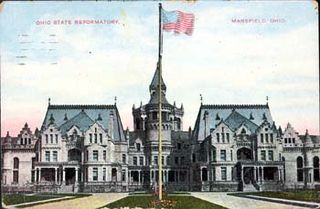
    With the opening of the Ohio State Reformatory in 1896, the state legislature had put in place "the most complete prison system, in theory, which exists in the United States."  The reformatory joined the Ohio Penitentiary and the Boys Industrial School, also central-Ohio institutions, to form the first instance of "graded prisons; with the reform farm on one side of the new prison, for juvenile offenders, and the penitentiary on the other, for all the more hardened and incorrigible class."  However, even as the concept was being replicated throughout the country, the staffs of the institutions were faced with the day-to-day struggle of actually making the system work.

    Excerpts from this book can be accessed at this link.  The Ohio State Reformatory referenced in this passage is located in Mansfield, and is now an historic site (and also where the great movie The Shawshank Redemption was shot).  I could be readily talked into a class field-trip to this site (for extra credit, of course, and we can skip "Glamour in the Slammer").  Even without a trip north, I urge everyone to take a virtual tour via this huge photo gallery.

    Especially if you are looking for some weekend web-surfing fun, check out these additional links to some good sites about some of the United States' most famous or most interesting prisons and jails:

  • An amazing website I highly recommend during every politcal season is The Living Room Candidate, which has video clips of more than 300 TV commercials from the major presidential candidates for every presidential election since 1952.  Historically, there have not been all that many ads focused on crime and punishment in presidential election cycles, but a few elections were especially notable for a few ads on these topics.

    The 1968 campaign, in addition to being the first with color TV ads, had lots of crime and punishment political ads such as this one "Crime" and this one "The First Civil Right" and this one "Law and Order Democrat" and this one "Busing/Law and Order".

    The 1988 campaign between then-Vice President George Bush and then-Massachusetts Governor Michael Dukakis had two of the most (in)famous modern attack ads: this one "Willie Horton" and this one "Revolving Door" (which I have embedded below).  The "Revolving Door" ad prompted this reponse.

    http://www.livingroomcandidate.org/flash/player.swf?id=4121
    

  • I will talk more about (and provide more structure for) the second paper in coming classes.  But, as explained in class today, the topic choices for the paper are limited to two hot(?) federal sentencing issues: federal statutory mandatory minimum sentencing provisions and/or circuit review of federal sentences for reasonableness after Booker

    There is an incredible amount of reading one can (and should?) do on either or both of these topics, and coverage of some basics on both topics can be found in our casebook.  In addition, here are a few "classic" and/or recent documents worth checking out for more detailed background reading:

    • US Sentencing Commission, Special Report to Congress: Mandatory Minimum Penalties in the Federal Criminal Justice System (August 1991).  As described by the USSC: "This report responds to a statutory directive that the Commission examine the compatibility of the sentencing guidelines and mandatory minimum penalties, the effect of mandatory minimums on the federal system, and congressional alternatives to mandatory minimums for directing sentencing policy."

    • Craig D. Rust, Student Note, When ‘Reasonableness’ is Not so Reasonable: The Need to Restore Clarity to the Appellate Review of Federal Sentencing Decisions after Rita, Gall, and Kimbrough (March 2010).  From the abstract by the author: "Booker completely changed the sentencing landscape in the federal court system, but it left many questions as to what standards appellate courts would apply in reviewing sentencing decisions.  The Supreme Court issued three opinions in 2007, Rita, Gall, and Kimbrough, in an attempt to resolve several of the circuit splits that resulted when the Supreme Court repealed the mandatory sentencing guidelines in Booker.  Practically speaking, these decisions failed to clarify what authority appellate courts wield in the sentencing process, and how appellate judges should exercise that authority.  This Article examines how the contradictory language from Rita, Gall, and Kimbrough not only failed to provide clarity, but created new inter- and even intra-circuit splits."

    • William K. Sessions III (former USSC Chair), At the Crossroads of the Three Branches: The U.S. Sentencing Commission's Attempts to Achieve Sentencing Reform in the Midst of Inter-Branch Power Struggles (March 2011).  From the abstract by the author: "[T]he Sentencing Commission must assume a leadership role in developing an improved federal sentencing scheme that recognizes the legitimate interests of each branch.  I urge the Commission, working together with Congress and executive branch, to reformulate the guidelines in a manner that helps reduce unwarranted disparities while, at the same time, remove the main obstacle that has hindered lasting achievement of the aspirations of the SRA: the undue complexity and rigidity of the guidelines system, which have resulted in large part from congressional directives and draconian mandatory minimum statutes and which have caused increasing numbers of judges to resist (and, after Booker, in some cases entirely reject) substantial portions of the current guidelines."

    None of these (lengthy) documents are required reading for the paper assignment, and there might be some value in doing some of your own web-exploration on both topics without reading these (lengthy) papers.  Here are links to a variety of websites that discuss modern federal sentencing practices in various ways:

Design a site like this with WordPress.com
Get started